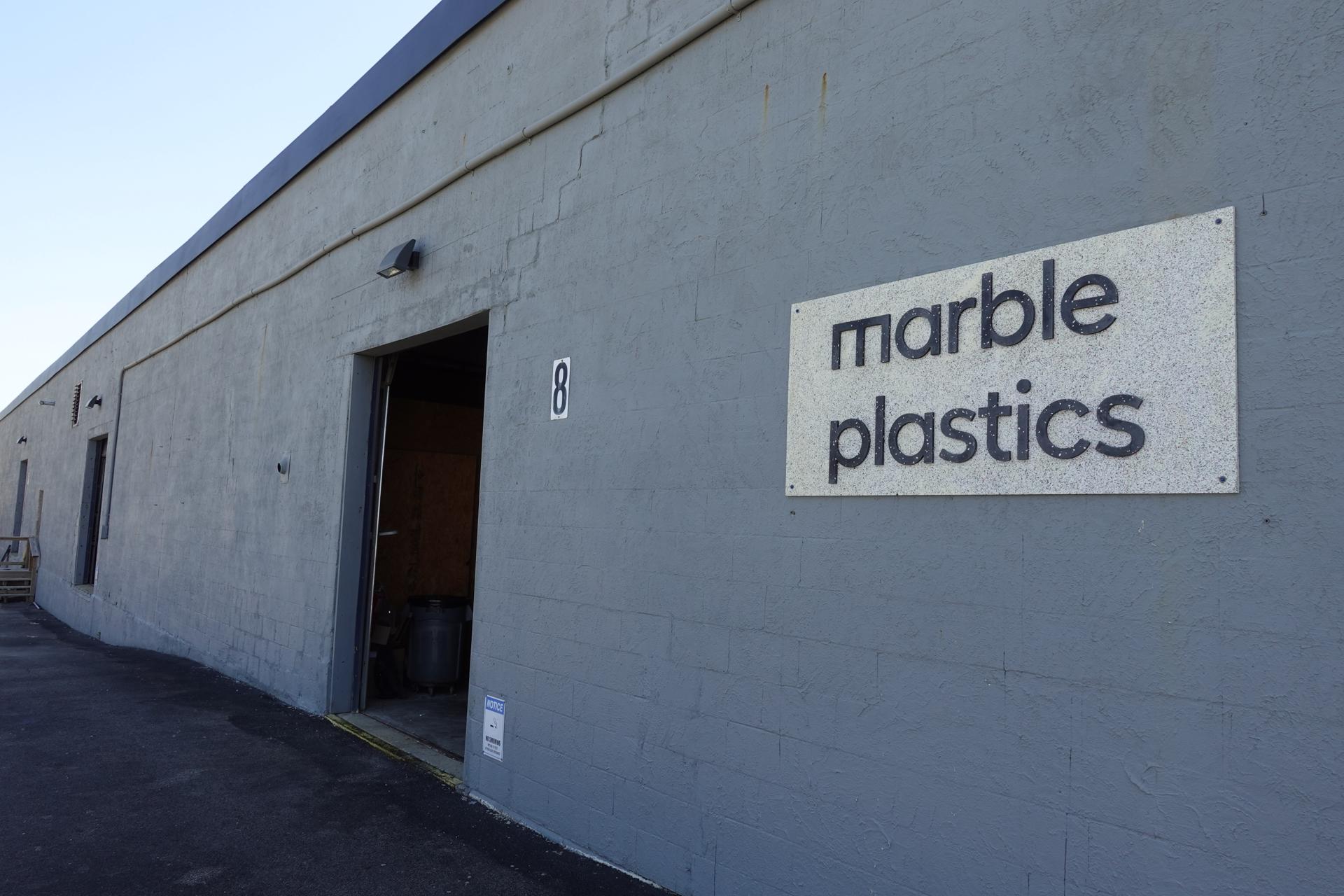
About · Marble Plastics
Plastic, treated like marble.
The name
The name is a provocation.
Natural marble is finite. It’s pulled from quarries, shipped across oceans, and reserved for projects that warrant the gesture — countertops, lobbies, civic objects meant to last lifetimes.
Plastic is not finite. Less than ten percent of all the plastic ever made has been recovered. The rest sits in landfills, in the ocean, or burns in cement kilns six minutes after it leaves the production line.
Plastic was engineered to last decades. A material that durable deserves to be treated like marble — preserved, specified, and built into the things that have to outlast the people that designed them.
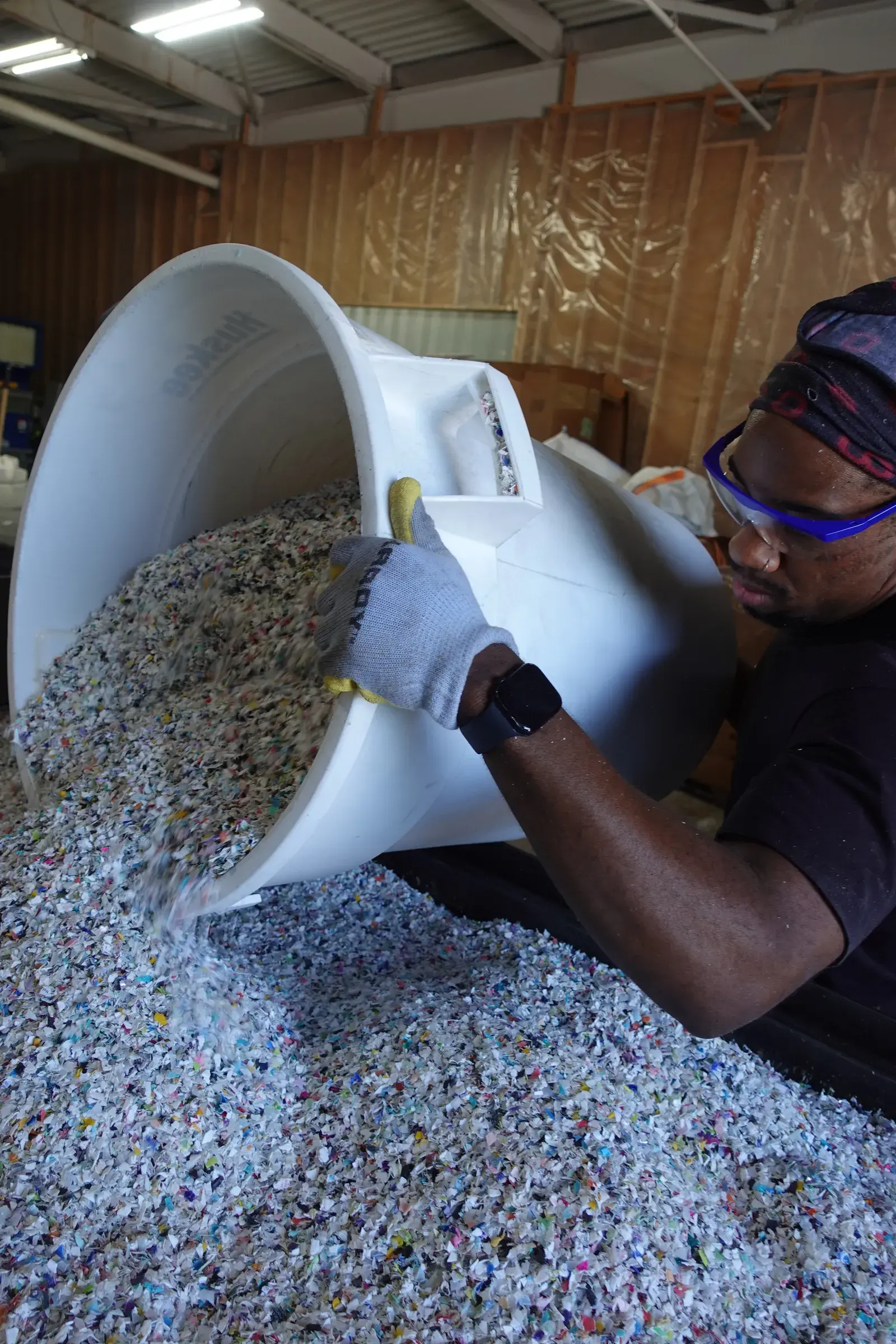
That’s the work. Take a feedstock the industry insists is disposable, and put it inside the building.
The record so far
95+
Completed Projects
58K+
Lbs Diverted from Landfill
~18
Metric Tons of CO₂ Avoided
0
Virgin Plastic Used
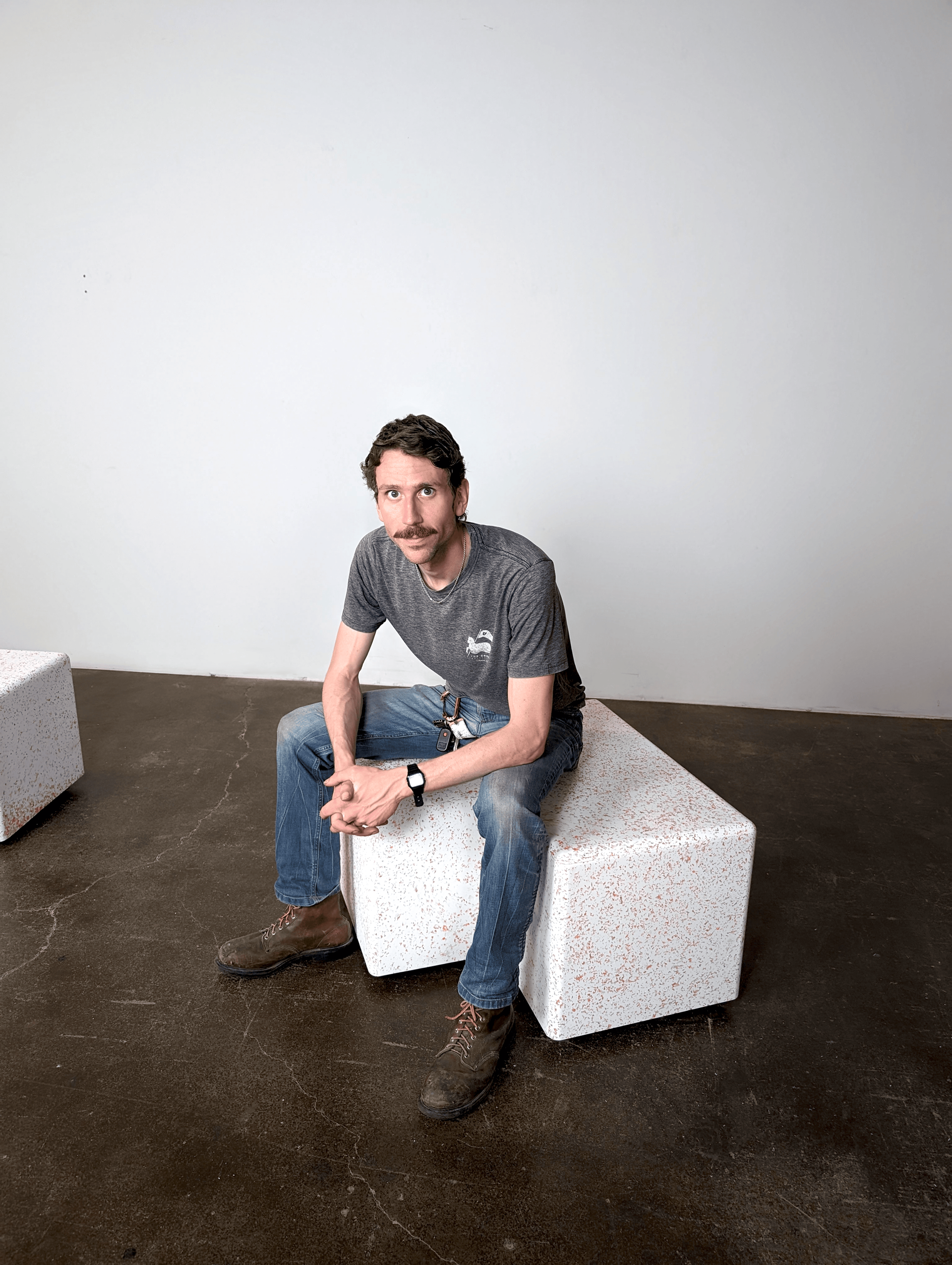
A note from the founder
It took me years to learn you can’t recycle what people don’t want.
I spent them trying anyway — first at the Ohio EPA, matching one company’s waste to another’s supply, then across four continents with Precious Plastic, the global open-source recycling movement, building small machines wherever they’d take root. The recycling worked. The market for what came out of it usually didn’t.
Then I watched a sheet press do something the spreadsheets never could. It pressed plastic waste into a flat, solid surface you could actually build with — a countertop, a wall panel, a bench — and you could see, right there in the material, what it used to be. That was the answer to the wall I kept hitting: recycled stops being a compromise the moment the recycled thing is something people want.
That insight is the whole company. The pattern of every sheet is the feedstock it came from. We don’t tint it, print it, or pour in a swirl — what the plastic was before is visible in what it becomes. I’d rather show that than hide it.
Columbus is where I started. It isn’t where this ends. I want a recycler in every region, pressing that region’s own waste into the surfaces built around it — the way people came back to knowing their farmer. Know your recycler.
Let us know whatyou’re designing.
Request a quote, custom materials, or application guidance directly
from the team that manufactures the material.